
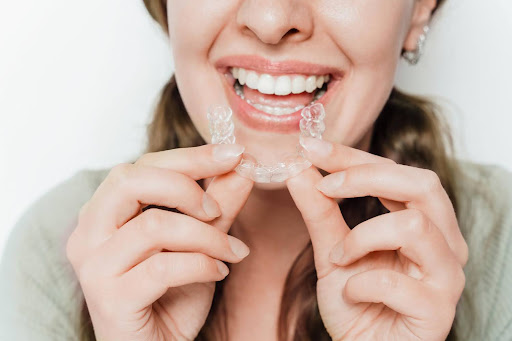
When you first begin your journey with clear aligners, it is incredibly exciting to look ahead at your treatment plan. Your provider shows you a digital map of your smile, showing exactly how your teeth are expected to shift from week to week. You receive your first sets of clear aligners and you start counting down the months until your final tray.
But as you get close to the end of your initial series of trays, you might notice that a couple of teeth are not quite in their exact, final positions yet. Your alignment is vastly improved, but it is not completely finished. This is the exact moment where your provider will likely discuss a phase called Invisalign refinements.
Hearing that you need additional Invisalign trays can sometimes feel a bit surprising if you expected to be totally done on a specific date. However, this adjustment phase is a completely normal, standard part of the modern orthodontic process. Let us take an honest, straightforward look at what refinements are, why they are so common, and how they help you get the best possible final outcome.
What Exactly Are Invisalign Refinements?
Think of your initial set of aligners as the main phase of your treatment. This primary series does the heavy lifting, moving your teeth from their original, crowded, or spaced-out positions into a much healthier, straighter alignment.
An Invisalign touch-up treatment is essentially a mid-course correction or a final polishing phase. Once you finish your initial sets of trays, your orthodontist will carefully evaluate your teeth to see how closely they followed the digital plan. If a few stubborn teeth are lagging behind, they will take a new digital scan of your mouth. From that scan, a small, targeted set of additional aligners is created to finalize those last micro-movements.
It helps to realize that getting refinements does not mean your treatment has failed or that something went wrong. It simply means your body is responding to the physical forces in its own unique way, and your plan needs a minor adjustment to cross the finish line safely.
Why Do Some Teeth Need Extra Help Moving?
Orthodontic treatment is a biological process, not just a manufacturing one. Human teeth are rooted in living bone tissue, and everyone’s body reacts to the gentle pressure of aligners a little bit differently. Several common factors can cause a smile to need a few extra trays at the end of the line.
Stubborn Tooth Anatomy
Some teeth are naturally more difficult to move due to the shape of their roots or their position in the jaw. For example, small, rounded teeth like lateral incisors can be incredibly difficult for plastic trays to grip firmly. Canines have very long, thick roots anchored deep into the bone, requiring consistent, sustained force to shift completely. If these specific teeth start to lag behind the digital simulation, a refinement scan allows your provider to add targeted pressure points to get them back on track.
Even patients who wear their aligners exactly as instructed may require refinements because tooth movement does not always occur exactly as predicted by digital simulations. This is a normal part of the orthodontic process and helps ensure the most accurate final result.
The Tracking Reality
In the orthodontic world, tracking refers to how perfectly your physical teeth are following the movements programmed into your Invisalign aligners. Even if you are incredibly disciplined with your daily routine, microscopic gaps can occasionally form between the edge of your tooth and the plastic tray. Once a tiny gap appears, the tray loses its optimal leverage, and the tooth stops tracking. Refinements reset the entire system, creating a brand-new plastic mold that hugs the tooth tightly in its current position.
How Refinements Impact Your Invisalign Treatment Timeline
One of the most frequent questions patients ask when discussing extra trays is how this phase will affect their total time in treatment. It is completely natural to want to know exactly when you can stop wearing plastic trays all day long.
When you initially start your Invisalign treatment your provider will give you an estimated timeline based on average movement rates. However, a highly experienced orthodontist designs your plan with the understanding that human biology is unpredictable. They often factor the possibility of a refinement phase right into your overall care strategy from day one.
A refinement phase does add a few weeks or months to your total journey, as you will typically need to wear a small series of five to fifteen extra trays. While extending the timeline can require a little extra patience, rushing to finish without these final adjustments can leave your bite misaligned, which can cause long-term wear on your enamel or cause your teeth to slowly shift back out of place later in life.
The Role of Patient Compliance
While biology plays a massive part in how your teeth move, daily habits are the absolute foundation of successful clear aligner therapy. To get the absolute best Invisalign results, the trays must stay in contact with your teeth for twenty-two hours out of every single day.
If you frequently leave your trays out for long lunches, forget to put them back in after dinner, or skip wearing them for a couple of days during a busy week, your teeth may stop tracking as planned. When this happens, a refinement phase may become necessary to help get treatment back on track. However, even patients with excellent compliance sometimes require refinements due to natural differences in tooth movement and bone response. Being completely honest with your orthodontic team about your daily wear time helps them determine whether your teeth need a fresh aligner design or whether additional wear time with your current trays may be beneficial.
Personalized Clinical Guidance in Lawrenceville
At Callan Orthodontics, our team believes that a truly great smile is built on personalized attention and clear communication. We understand that your lifestyle is busy, and we focus on making your aligner experience as smooth, predictable, and stress-free as possible.
If you are currently navigating your Invisalign treatment, our clinical team monitors your progress closely throughout your treatment journey, ensuring every stage of tooth movement is progressing as planned. We do not use a one-size-fits-all approach or rush you through the process. Instead, we use high-resolution digital imaging to evaluate your progress and discuss whether an Invisalign touch-up treatment is the safest, most efficient path to give you a comfortable, healthy bite.
Partnering with Callan Orthodontics means you get transparent explanations at every stage, a supportive team dedicated to your long-term oral health, and a treatment plan customized completely to your unique anatomy.
Frequently Asked Questions
Q: Is an Invisalign refinement phase painful for your teeth?
A: A refinement tray feels exactly like the very first few sets of your initial treatment. You will likely feel a sensation of tight pressure for the first day or two after inserting a new set of trays, which is a normal sign that the plastic is applying the necessary force to shift your teeth.
Q: Do you have to pay extra money for refinement aligners?
A: For many comprehensive aligner plans, a refinement phase is included in your original treatment package up to a certain point. Your specific out-of-pocket costs depend on the type of plan selected at the beginning of treatment, and the orthodontic team will provide a clear breakdown of coverage and any potential costs before ordering additional trays.
Q: Can you just skip the refinement phase if you are already happy with your smile?
A: While your front teeth might look perfectly straight to you, your orthodontist is also evaluating how your back teeth meet when you chew. If your bite is left uneven, it can lead to jaw joint discomfort or premature tooth damage. It is usually best to follow your provider’s recommendation to protect your health.
Q: How many additional Invisalign trays will I need during the refinement process?
A: The number of extra trays varies significantly based on how many teeth need to be adjusted. A simple touch-up might only require five or six trays, while a more complex bite correction might require a larger series to achieve a stable result.
Q: Do I still need to wear attachments on my teeth during refinements?
A: It depends entirely on the specific movements required to finish your smile. Your orthodontist might keep your existing tooth-colored attachments in place, remove some of them, or place a few new ones in different positions to give the new trays the exact leverage they need.